Search by section

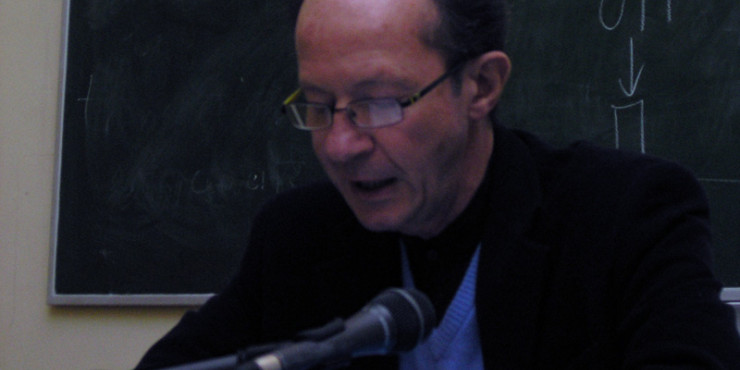
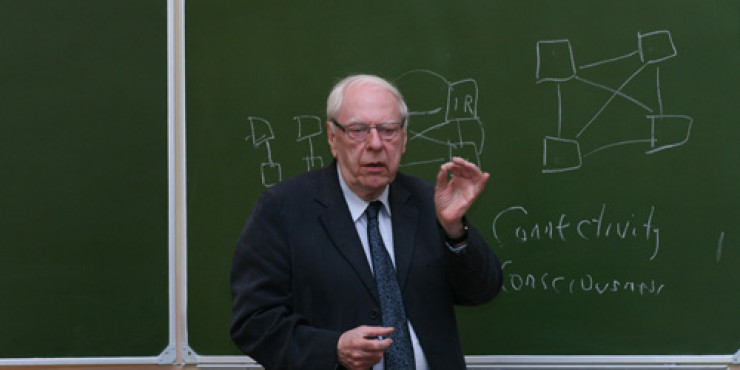
Lecture by Roland Robertson (University of Aberdeen, UK) "Reconfiguration of the World in the Perspecitive of the Global Field"

27.02.2014
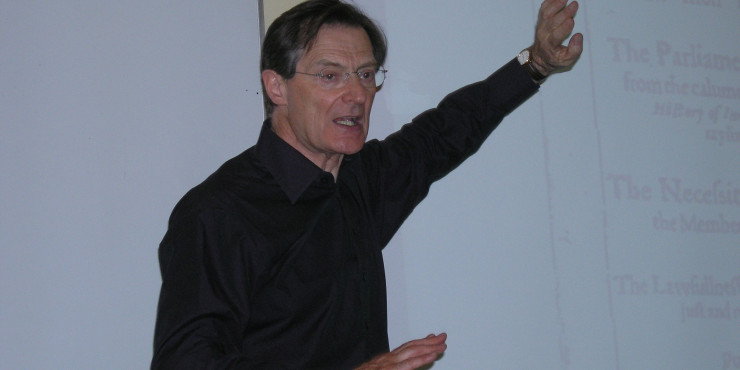
The contemporary sociological dictionary is obliged to Roland Roberston for the development and the popularization of the terms globalization and glocalization. In 1968, Roberston put forth a thesis that the sphere of culture has a decisive meaning for the categorization of the world, and began to develop the theory of globalization, which allows the conceptualization of the not only as a structure of changes, but also as changes that originate at the level of the consciousness of individuals.
photos
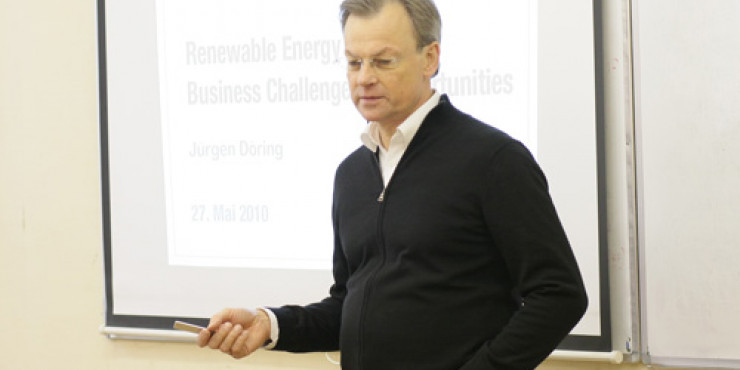
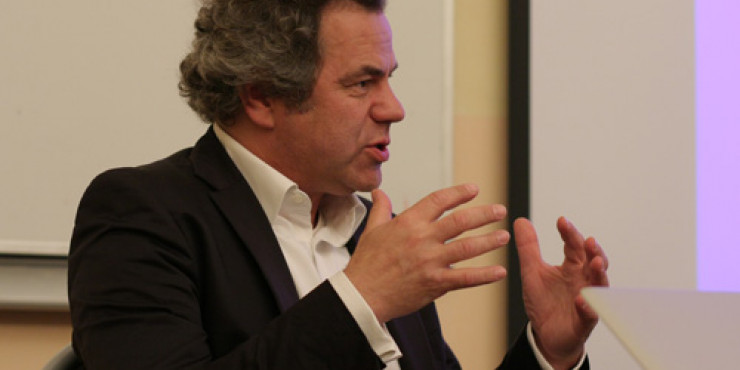
Lecture by Jurgen Doring "Investing in renewable energy: practical experience from two decades as an engineer and businessman "

27.02.2014
Jurgen Doring started his first company at the age of 23, right after graduating from Munich Technical University as an electrical engineer. rd electronics has since grown into a global leader in car electronics, measurement and testing systems. Venturing out to repeat this success, Jurgen started AEE Renewables where he now spends most his time as CEO. AEE develops and builds hydro power plants as well as solar (photovoltaics) plants.
photos

Lecture by Oliver Grau (Germany) "Media Arts Challenge for Our Societies"

26.02.2014
Over the last thirty years Media art has evolved into a vivid contemporary factor, Digital Art became the art of our time but has still not arrived in the core cultural institutions of our societies. Although there are well attended festivals worldwide, well funded collaborative projects, numerous artist written articles, discussion forums and emerging database documentation projects, media art is still rarely collected by museums, not included or supported within the mainframe of art history and nearly inaccessible for the non northern public and their scholars.
photos

Lev Masiel Sanches (Moscow) "The Antique Russian Architecture of XVIII Century"

26.02.2014
The subject of the presentation (entitled so paradoxically) is Russian regional architecture of XVIII c. that had managed to conserve some forms of late Middle Ages style through all the century. This architectural phenomenon will be presented as somewhat that cannot be reduced to a dichotomy “capital/provincial”. The lector will analyze the transformation of bulks, compositions, and décor of forms in their relations, which change from one generation to another.
photos

International conference "Law and Law Enforcement in Russia: Interdisciplinary Research"

26.02.2014
The Institute for the Rule of Law in EUSP held the international conference devoted to the discussion on the current situation with law and law enforcement practices At the opening of the conference EUSP proudly hosted the lectureby the Chairman of the Constitutional Court of the Russian Federation Valery Zorkin Conference programme (pdf 61KB)

Lecture by the Chairman of the Constitutional Court of the Russian Federation Valery Zorkin

26.02.2014
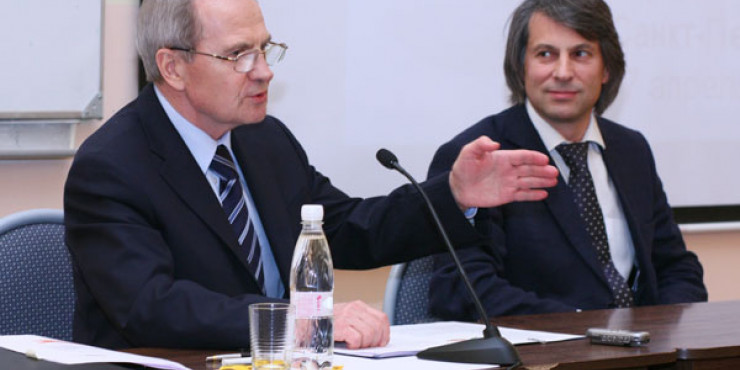
At the opening of the international conference "Law and Law Enforcement in Russia: Interdisciplinary Research", EUSP proudly hosted the lecture by the Chairman of the Constitutional Court of the Russian Federation Valery Zorkin. In his speech, Mr. Zorkin elaborated on his vision of "the paths of Russia toward law". He touched upon the current situation with law enforcement practices and expressed his opinion on the issue of judicial precedent and its significance in Russia.
photos

Honoured guest lecture by the Chief Executive Officer of RBI Holdings Edward Tiktinsky "The Origins of the Modern World. Capitalism Today. How to Succeed in Today's Business World"

26.02.2014
 In the presentation Mr. Tiktinski shared his views on the worldview and cultural formation, commented on the causes of the world economic crises and touched upon the issue of business development ethics. After the lecture Edward Tiktinsky answered the questions from the students, graduates and professors of the University
photos

Lecture by professor Richard Taruskin (USA) "The History of What? Problems of Musical Historiography"

26.02.2014
Richard Taruskin is a musicologist, music historian, and critic who has written about the theory of performance, Russian music, fifteenth-century music, twentieth-century music, nationalism, the theory of modernism, and analysis.  As a choral conductor he directed the Columbia University Collegium Musicum. He played the viola da gamba with the Aulos Ensemble from the late seventies to the late eighties. He received various awards for his scholarship. His Opus Magnus  - “Oxford History of Western music” – in six volumes gains him a world fame.
photos

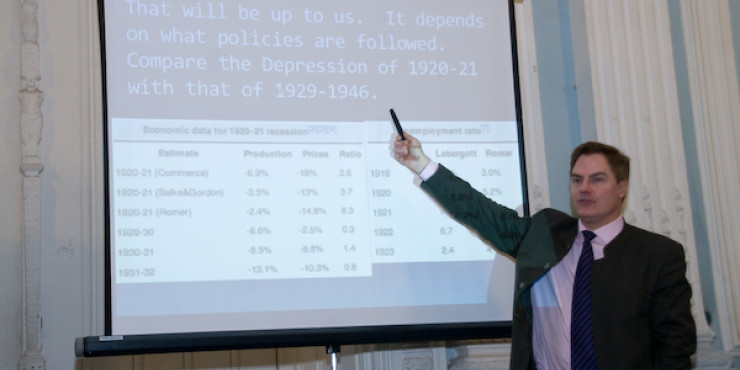
Presentation by Tom Palmer (Atlas Economic Research Foundation) "Protectionism and Financial Crises"

21.02.2014
Dr. Tom G. Palmer is the Vice President for International Programs at the Atlas Economic Research Foundation. Previously he was Vice President for International Programs at the Cato Institute and Director of the Center for Promotion of Human Rights.  He is a Senior Fellow at the Cato Institute and Director of Cato University, the Institute's educational arm. 
photos

Presentations by Robert D. Putnam (Harvard University, USA) ""Making Democracy Work" in Hindsight"

19.02.2014
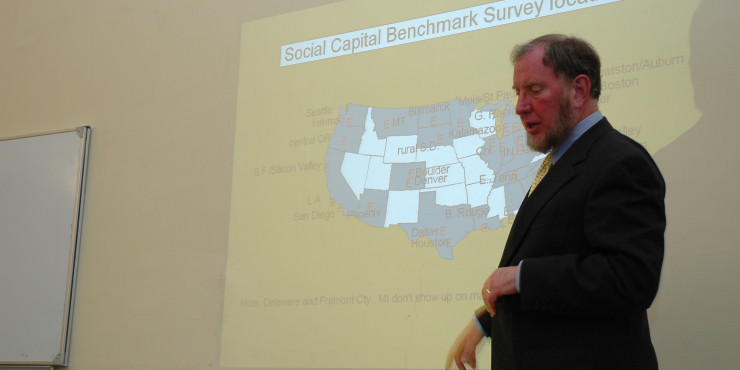
Robert Putnam is a political scientist and professor at Harvard University, well-known for his writings on civic engagement, civil society, and social capital, a concept of which he is probably the leading exponent. Putnam also developed the influential two-level game model that assumes international agreements will only be successfully brokered if they also result in domestic benefits.
photos

International workshop "Classic Republicanism as a Freedom Affirming Alternative to Liberalism"

19.02.2014
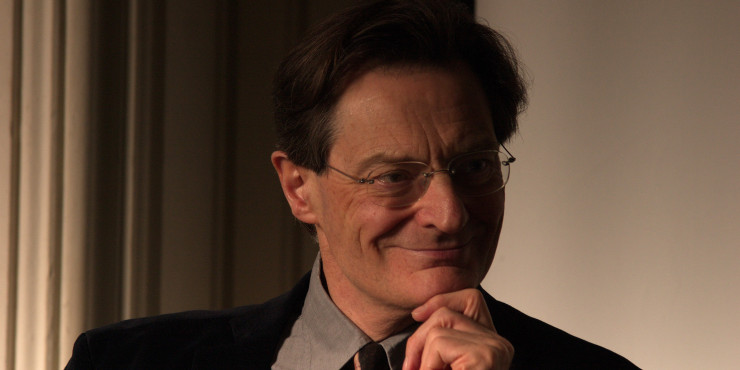
Quentin Skinner is a Regius Professor of Modern History at Cambridge University. He is usually taken to be the head of one of two schools of conceptual historians (Anglo-American, or Cambridge school, another one being the Begriffsgeschichte approach associated with Reinhart Koselleck). Prof Skinner has published a lot on early modern European thought, starting with by new classic Foundations of Modern Political Thought (2 vols.
photos

Presentation by Prof. Hans Joas (University of Erfurt, Germany) "Trauma and Human Dignity. The Experience of Violence and the Genesis of Values"

18.02.2014
Hans Joas heads the Max Weber Center for Advanced Cultural and Social Studies (University of Erfurt, Germany) and is currently a Fellow of the Institute of Advanced Studies in Berlin. Prof. Joas serves on the editorial boards of the leading sociological journals and is the author of such books as «The Creativity of Action» (University of Chicago Press, 1996) and «The Genesis of Values» (University of Chicago Press, 2000).
photos