{slide=WORKSHOP in SOVIET HISTORY}
The Department of History of the European University at St. Petersburg is glad to announce the workshop for graduate students in Soviet history.
New workshop will take place on the 3 of December at 17-00 in auditorium №5
{slide= 1st workshop, 27 of March 2013}
-- The first international workshop on Soviet history at the Department of History of EUSP took place on 27 of March, 17.00.
The first speaker was Mihály Kálmán, Ph.D. Candidate, History Department, Harvard University.
He presented his paper: "A Tale of Two Bronshteins: Jewish Paramilitarism and Revolutionary Order in Ukraine"
Based on archival research in Russia, Ukraine, Israel, and the United States, this paper explores the history of Jewish self-defense groups during the Russian Civil War. In particular, it examines their the relationship to and cooperation with Soviet organs of power during 1921-1923. The main focus will be on the tensions between the Jewish Sections of the Communist Party and Jewish paramilitaries, and on the support provided to Jewish units by the Cheka, local authorities, and especially by the Ukrainian Sovnarkom. At the same time, the paper will provide an in-depth look at the methods whereby self-defense groups gained control of, and support from the local Jewish population, becoming one of the largest communal enterprises and networks on the “Jewish street.”

{slide= Second workshop, 24 of April 2013 }
Докладчик: Брэндон Шехтер
Стажер, Центр исторических исследований, Факультет истории (Санкт-Петербург), НИУ ВШЭ
Ph.D. Candidate, Факультет истории, Университет Калифорнии в Беркли
Тема: "Личное знамя: жизнь в форме в РККА"
Автор представит нам половину главы из своей диссертации под названием «Личное Знамя: жизнь в форме в РККА». В прошлом году на конференции «Конструируя Советское» он выступил с частью этого текста, касающейся символики формы и того, как эта символика стала читаемым текстом на форме солдат. На этом семинаре, Шехтер предлагает рассмотреть детали повседневности в форме, нечто вроде этнографии жизни красноармейцев. Автор анализирует такие предметы как шинель, белье, обувь и каски – как государство оценивало их, как солдаты их использовали и как эти предметы влияли на сознание солдат.
Если Ваш e-mail не включен в рассылку и Вам хотелось бы получить текст доклада (на русском языке), пожалуйста, напишите Анатолию Пинскому, anatoly.z.pinsky@gmail.com"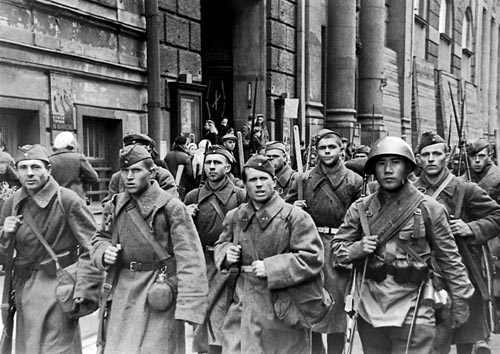
{slide=Third workshop, 24 of October, 18-00}
Tom Rowley"Documentary Film, Dissident Reburial, and the End of the Soviet Union"
The late 1980s saw the exposure of abuses committed by the Soviet authorities from 1917 onwards as part of the expanding opportunities for official and informal press. But while the attention of various audiences and editorial boards was led by revelations concerning the period 1917-1953, the late Soviet period received less attention in terms of official journalistic inquiry. As part of a PhD dissertation on memories of dissident activity, this chapter charts the perestroika-era campaign for justice by dissidents, in particular by looking at the attempts to broadcast dissident martyrdom to a wider audience. Initially, the chapter addresses the sense of lingering injustice at deaths of political prisoners under conditions of restricted press freedom by examining elegiac poetry released in samizdat during the 1970s and 1980s. It then moves on to focus on how the combination of reburial and documentary film was able, at least in part, to fulfil the demand for justice contained in dissident sacrifice.
By the late 1980s, the authorities' interference in the burial of dissidents meant that the reburial of dissident activists was seen by their families, friends, and supporters as a means of restoring justice to forgotten or slandered individuals. After years of repression, the mere fact of publicly exhuming bodies represented a dismantling of the authorities' control for dissident groups and, as such, were events that had to be recorded: the reburial of Vasyl' Stus, Iurii Lytvyn, and Oleksa Tykhyi in Kyiv in November 1989 was shaped as a moment of national awakening; the reburial of Iurii Galanskov ten days after the end of the August events in 1991 led to spontaneous lustration in the Mordovian camp where Galanskov was buried. In these cases, documentary film crews not only fixed the evidence of sacrifice on film, they also made these events possible logistically. In short, this chapter looks at how documentary film played a key role in the dissident campaign for justice: film crews not only assisted the reburials on location, they were also involved in channelling dissidents demands during and after perestroika.
Tom Rowley is a PhD student at the University of Cambridge. His dissertation explores how post-war dissent is remembered in Russia through fiction, theatre and film from perestroika onwards.
*This seminar will be based on the discussion of a pre-circulated English-language paper. The discussion itself will be conducted in Russian.
*If you would like to receive the paper, please contact Anatoly Pinsky, apinsky@eu.spb.ru. (History Department students do not need to get in touch; you are already included in the distribution list.)
*After the seminar we will gather for a small reception in the History Department. All are welcome!
{slide=4th workshop, 5th of November, 17-00}
Dunja Dogo, Post-Doctoral Fellow, University of Siena (Italy)
“Glorification of Russian Conspirators in Early Soviet Cinematography: Portraying S.G. Nechaev and S.N. Khalturin”
In her paper, Dunja Dogo aims to show how two specific historical characters as well as radical revolutionists, S.G. Nechaev and S.N. Khalturn, were treated in Дворец крепость (1924) and Степан Халтурин (1925), respectively – the first Soviet full-length fictional films on Russian Populists and both directed by A.V. Ivanovsky for the Leningrad State cinematographic production “Севзапкино.” These works have in common one relevant characteristic: their screenplays were written by the prominent historian and man of letters P.E. Shchigolev, who made use of newly available archival material for the purpose of featuring history for the masses.
One key question shall guide Dogo’s discussion: in these two cinematic works, through which narrative devices were the stories of the recent revolutionary past reorganised and reinterpreted in relation to the projects predominating in the Soviet post-revolutionary present?
Елизавета Жданковa, аспирантка СПб ИИ РАН
«Советское кино через призму кинопрессы: формирование зрительской лояльности?»
На основе рецензий и зрительских отзывов рассматривается риторика официальной кино-прессы 1920-ых гг. (в частности, таких изданий, как «Жизнь искусства», «Кино», «Кино-неделя» и «Арт-кино»). Анализируются те приемы и методы, с помощью которых специализированными газетами предпринимались попытки формирования лояльности к новому советскому кино и – посредством кино – к «советскому» прочтению истории и «советскому» мировоззрению. Не оценивая эффективность этих методов, я акцентирую внимание на том, какие герои, темы, сюжеты становились объектом особого интереса рецензентов, и на что, следовательно, должна была быть нацелена «социальная оптика» зрителей при посещении советского кинотеатра.
*This seminar will be based on the discussion of a pre-circulated English-language paper and a pre-circulated Russian-language paper. The discussion itself will be conducted in Russian.
*If you would like to receive the papers, please contact Anatoly Pinsky, apinsky@eu.spb.ru. (History Department students do not need to get in touch; you are already included in the distribution list.)
*Per our custom, after the seminar we will gather for a small reception in the History Department. All are welcome!
{slide=5th workshop, 3th of December, 17-30}
Workshop will take place at 17-30 (3 of December), auditorium №5.
Tom Cubbin (University of Sheffield) will present his paper on "Artistic Design on the Edge of Utopia: Senezh Studio 1964–1974"
*This seminar will be based on the discussion of a pre-circulated English-language paper.
*If you would like to receive the papers, please contact Anatoly Pinsky, apinsky@eu.spb.ru. (History Department students do not need to get in touch; you are already included in the distribution list.)
*Per our custom, after the seminar we will gather for a small reception in the History Department. All are welcome!
{slide=6th workshop, 26th of March, 18-00}
International Graduate Student Seminar in Soviet History
Wednesday, March 26, 18.00, Room #5
A Party Nobility
Social reproduction and production of knowledge at the Moscow State Institute of International Relations (1944-1991)
Pierre-Louis Six
European University Institute (EUI)/ Ecole des hautes etudes en sciences sociales (EHESS)
Through the study of both an institution dedicated to the education of senior civil servants specialized in international affairs, the Moscow State Institute of International Relations (Moskovskij Gosudarstvennyj Institut Mezhdunarodnyh Otnoshenij, MGIMO) and the social status of its alumni called the Mezhdunarodniki, my Phd research intends to analyze the role of educational capital in the trajectories of a specialized elite in the USSR. Based on an analogy with Pierre Bourdieu’s book, La Noblesse d’Etat, the idea of Party nobility aims at bringing a new light to the strategies of social reproduction during the period of late socialism. As an anteroom of a career within the Soviet Ministries of Foreign Affairs and Foreign Trade, MGIMO presents similarities to the system of the French elite universities, where, according to Pierre Bourdieu, the awarding of degrees hides the intrinsic link between transfers of knowledge and transfers of social competences. And yet, the creation of the Mezhdunarodniki social category stands for a paradox within a Soviet regime characterized by the Party supremacy over social order, the dominance of Marxism-Leninism over Social Sciences and last but not least, the collective ownership of the means of production. How did the creation of this new social category reflect the evolution of the criteria necessary to the access to the Soviet elite after 1944? Did this specific part of the Soviet elite distinguish itself by the content of a desideologized curriculum taught at MGIMO? And, finally, how was the knowing of foreign knowledge related to the question of social reproduction in the period of late socialism? Those are three questions that stand behind the idea of Party nobility.
*This seminar will be based on the discussion of an English-language paper, to be circulated 7-10 days in advance of the meeting. The discussion itself will be conducted in Russian.
*If you would like to receive the paper, please contact Anatoly Pinsky, apinsky@eu.spb.ru. (History Department students do not need to get in touch; you are already included in the distribution list.)
*After the seminar we will gather for a small reception in the History Department. All are welcome!
{/slides}