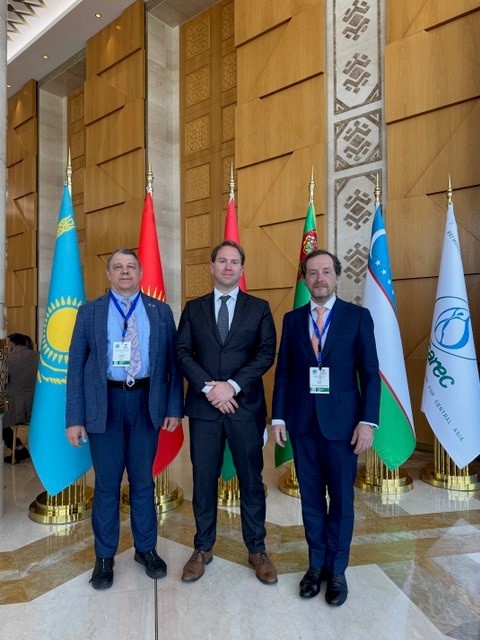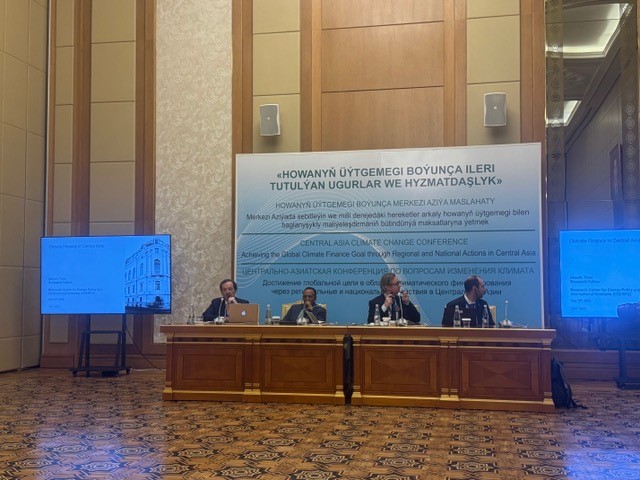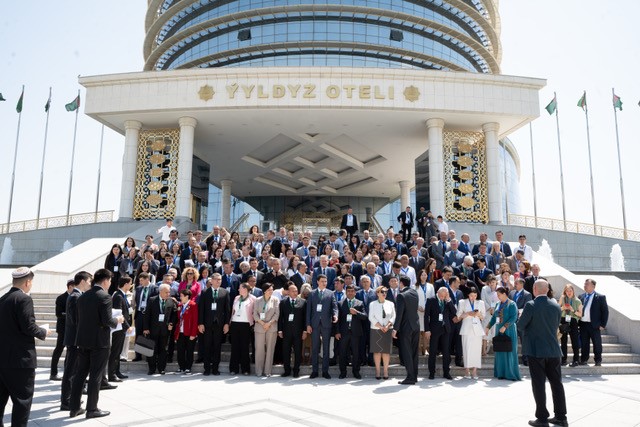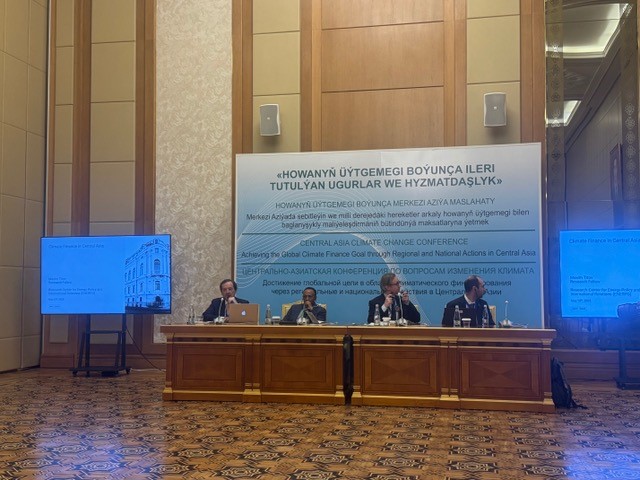
The Regional Environmental Center for Central Asia (CAREC) has been organizing the Central Asia Climate Change Conference (CACCC) since 2018 to facilitate regional dialogue on climate change mitigation and adaptation. This year, the seventh conference was held in Ashgabat from May 13-15 with the theme of “Achieving the global goal of climate finance through regional and national action in Central Asia.”
Maxim Titov, Research Fellow at the Energy Policy and International Relations Research Center (ENERPO), participated in the “Innovative Tools for Developing Climate Finance Strategies in Central Asia” session organized by the World Bank's Coalition for Capacity for Climate Action (C3A) initiative in cooperation with the Ministries of Finance of the countries in the region.
The session focused on three central themes:
Innovative financial instruments to combat climate change
What are the opportunities and challenges of using green bonds, debt for climate action (climate swaps), sustainability-related instruments, and blended finance solutions in the region? Are there relevant examples of global and regional experience, and what is the potential for scaling up such instruments in Central Asia?
Analytical approaches to assessing the macroeconomic impact of climate finance
What are analytical approaches to assessing the economic and fiscal impacts of innovative climate finance strategies? How can such approaches help to incorporate climate, balance of payments, and debt financing risks into macroeconomic frameworks? In particular, what experience do countries have to date in public investment planning and evidence-based decision-making by finance ministries?
Improving the regulatory framework for mobilizing climate finance
What is the role of carbon pricing, subsidy reform, regulatory frameworks and public investment planning in mobilizing climate finance? How can targeted fiscal policies and incentives reduce the risk of private investment in low-carbon sectors? What experience do countries have in designing and implementing coherent regulatory policies to accelerate the energy transition?
Maxim Titov presented a report titled “Financing energy and climate projects in Central Asia: sovereign and non-sovereign investments, private funds” within this session, which was devoted to the following aspects of climate finance:
- The role of international financial institutions in financing water, energy and climate initiatives in Central Asia
- An overview of sources of sovereign and non-sovereign finance, including investment loans, stabilization loans, grants and technical support projects
- The role of international development banks, namely the four key areas of the MDBs' work related to sustainable development, including expanding financing and mainstreaming the UN Sustainable Development Goals into business processes, advancing the agenda and setting standards, and mobilizing private finance
- The increasing role of technical assistance programs. All international development organizations report that technical assistance and capacity building programs are in high demand by local governments. Knowledge sharing, capacity building and train-the-trainer programs are areas where technical assistance is in demand and welcomed
Key conclusions and recommendations of the session:
- Improve the analytical framework for assessing climate finance strategies in Central Asian countries
- Provide capacity building and support for the development of such strategies
- Evaluate different climate finance instruments and their application in Central Asian countries
- Facilitate regional dialog on climate finance approaches