Search by section

NATIONAL TREASURE OR QUACKERY? Changing attitudes to folk and complementary medicine in post-Soviet Kazakhstan and Kyrgyzstan

29.04.2018
In my presentation I will discuss how the official attitudes to complementary and alternative medicine (CAM), and particularly to folk healing have been changing in Kazakhstan and Kyrgyzstan since proclamation of their independence. Initially, these countries, similar to the other newly independent Central Asian states, strove to confirm their legitimacy through referring to the richness of their cultural heritage, including traditional medical knowledge and practices.

THE AAUP AND THE STRUGGLE FOR ACADEMIC RIGHTS IN THE U.S.

19.04.2018
The American Association of University Professors was founded in 1915 to defend the academic freedom and general professional standing of college and university faculty members. It is widely recognized as the authoritative voice on questions of academic freedom at all levels of higher education in the U.S. In the early 1970s the AAUP embraced trade union representation and today about 3/4 of its 50,000 members are in union chapters.

“SPANISH CASTLES” IN THE AEGEAN: Greek Political Imagination in the Russian Archipelagic Principality, 1770-1774

06.04.2018
On December 20, 1768, as Russian plans to launch a naval expedition into the eastern Mediterranean began to materialize, Catherine II wrote to her envoy in London, describing how her tendency to build “Spanish castles” had been awakened. While, in some ways, idealistic, Catherine’s Greek project produced several tangible successes in the early 1770s. Following the victory at Chesma, in the summer of 1770, the Russian navy established firm control over the Aegean Sea for the remainder of the war.

TEMPORALITIES AND ONTOLOGIES OF HARM: The 2009 H1N1 Pandemic and the Case of Vaccine-Associated Narcolepsy

26.03.2018
This presentation introduces the initial findings of my new research project on cultural debates about vaccines. The paper focuses on the debates surrounding the connection between the Pandemrix vaccine used in the mass vaccinations in Europe during the 2009 H1N1 pandemic and the reported increase in narcolepsy among vaccinated children especially in Finland, Sweden, Ireland and the UK.

MAKING GENETIC ANCESTRY: Population Genetics and Belonging

26.03.2018
This talk will reflect on the key themes of my book, Population Genetics and Belonging (Palgrave Macmillan 2018). I explore how population genetics has emerges as a means of enacting belonging in contemporary technoscientific societies. I will reflect on the contradictions that underlie the project of discovering genetic roots, focusing on the tensions between global, national, communal and personal genetic belonging. I argue that genetic roots are not discovered – they are enacted through a range of technological, discursive, affective and material practices.

PARTICIPATORY BUDGETING: competing political, good governance and technocratic logics

01.03.2018
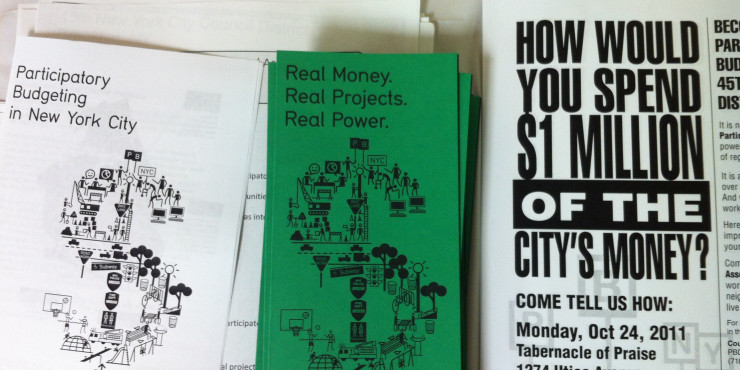
Yves Cabannes: University College London, Development Planning Unit, Emeritus. Participatory budgeting (PB) has been a major innovation in participatory governance worldwide, with more than 3,000 experiences listed across 40 countries. PB has also diversified over its 30 years, with many contemporary experiments (referred to as PBs) only tangentially related to the original project to “radically democratize democracy”.

PAVEL KONONENKO - CANDIDATE OF SCIENCES IN POLITICS

30.01.2018
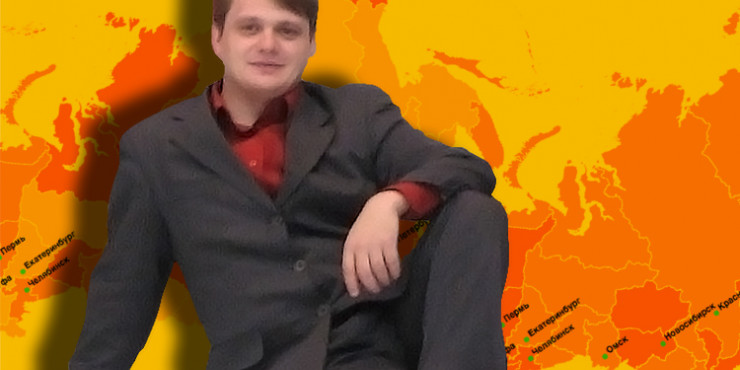
EUSP Political Science and Sociology Department graduate Pavel Kononenko defended his dissertation "Vliianie glav sub"ektov Rossiiskoi Federatsii na evoliutsiiu institutov regional'noi i mestnoi vlasti [The Influence of the Heads of Constituent Territories of the Russian Federation on the Evolution of Regional and Local Power Institutions]" at the National Research University Higher School of Economics on January 29, 2018. His dissertation supervisor at HSE was Dr. Andrei Shcherbak.

DARIA SVIRINA: BEST GRADUATION THESIS

30.01.2018
EUSP Department of History alumna Daria Svirina has received the award of the German Historical Institute Moscow for the best graduation thesis. The work was titled "Germanness" in the Memoirs of Russian Germans Deported to the Krasnoyarsk Krai." Congratulations to Daria on her achievement!

SEX AND ONTOLOGY

29.01.2018
The report will explore the encounter between psychoanalysis and philosophy at the point where the two seem to be the most incompatible. Sex (and psychoanalytic theory of sexuality) is something that philosophy usually doesn't know what to do with; sex is the question usually left out in even the most friendly philosophical appropriations of Lacan and his concepts. And ontology (as since of pure being) is something that psychoanalysis doesn't know what to do with, or is highly critical about.

COULD/SHOULD JUBILEE DEBT CANCELLATIONS BE REINTRODUCED TODAY?

22.01.2018
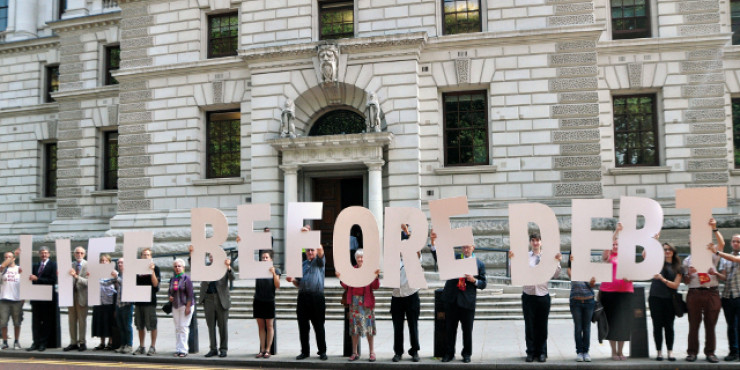
In this paper we recall the history of Jubilee debt cancellations, emphasizing what their social purpose was at that time. We note that it would not be possible to copy that procedure exactly nowadays, primarily because most debt/credit relationships are intermediated via financial institutions, such as banks, insurance companies, etc., rather than by governments or wealthy families directly.

DISCUSSION ON MONETARY POLICY

19.01.2018
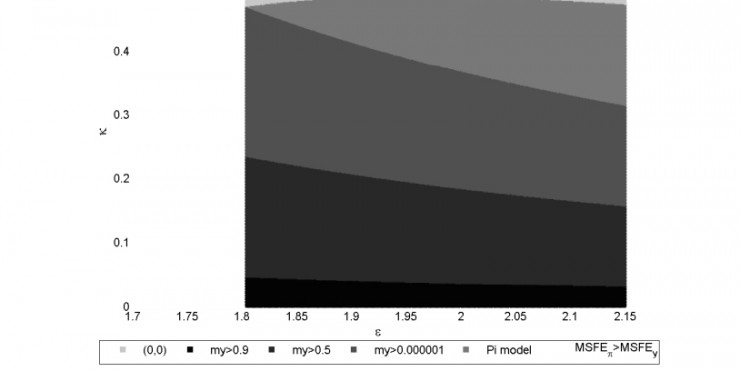
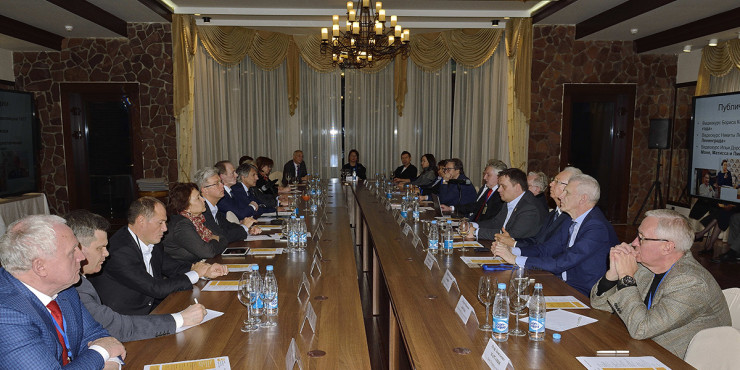
Central Banking: Past, Present and Future Financial crisis of 2008-2009 and unconventional measures of monetary policy following it raised a number of questions related to the role and functions a Central bank should play in an economy. How will the set of monetary policy tools changes? Which factors will influence monetary policy most in the future? What are the challenges Central banks should get ready to? These and other factors will be discussed by the roundtable participants.   Programme 16:00 – 16:50

EVGENII VLADIMIROV: BEST GRADUATION THESIS IN ECONOMICS IN RUSSIA

11.01.2018
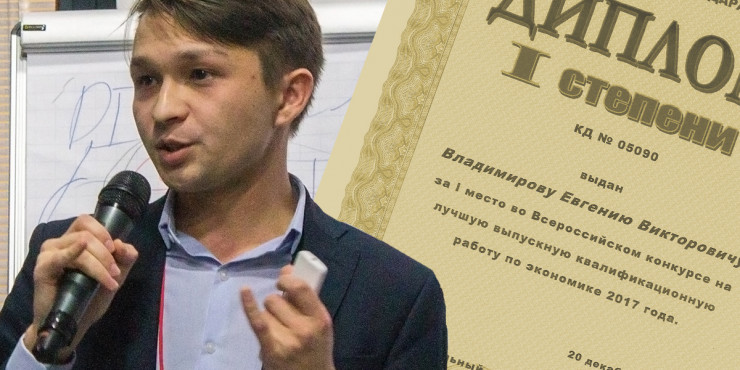
EUSP graduate Evgenii Vladimirov's final thesis won the first prize at the Competition for Young Economists 2017 for the best graduation thesis in economics organized by the Gaidar Institute for Economic Policy among graduates of economics schools and departments at higher educational institutions in Russia. More than 300 young economists who defended their theses in 2017 participated in the contest.