Search by section

"Russian desmans are of interest because they are a relict species, millions of years old"

22.01.2026
Scientists from the European University at St. Petersburg, together with colleagues from Moscow State University and the Academy of Sciences of Uzbekistan, have decoded the complete genome of the Russian desman for the first time. The results revealed the species' very low genetic diversity. These data will help develop scientific methods for its conservation and population restoration. A report on the study was published in Izvestia.

Paleogeneticists have analyzed the DNA of plants inside a burial doll from the Tashtyk culture

09.12.2025
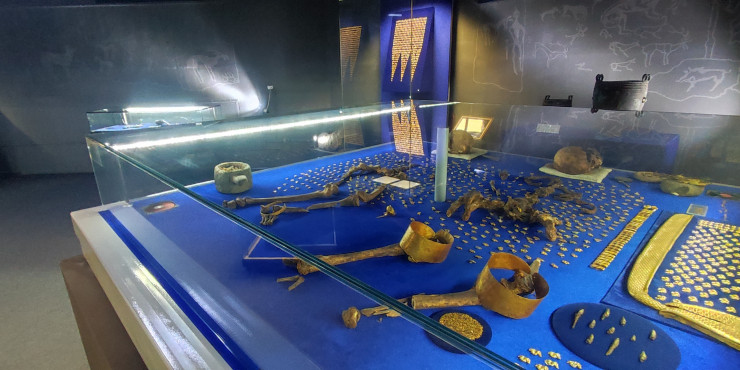
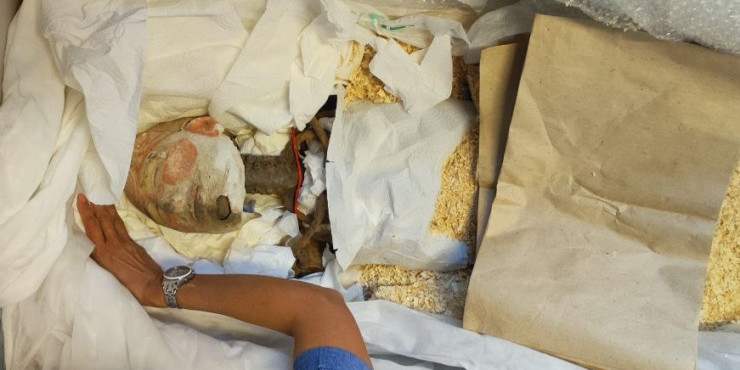
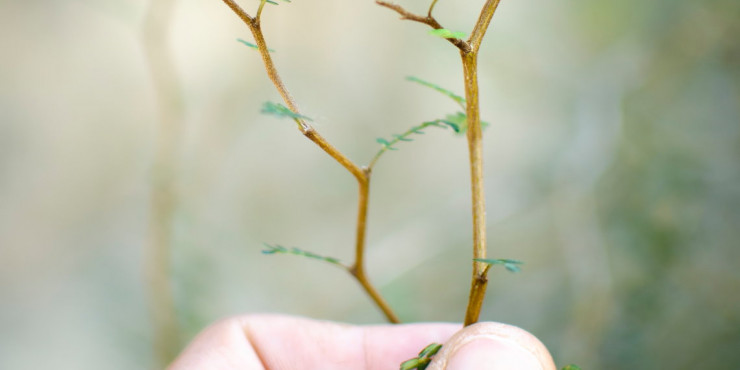
Artem Nedoluzhko, head of the Paleogenomics Laboratory, Svetlana Pankova, a research associate at the same laboratory, and their colleagues conducted a DNA analysis of the grasses stuffed in a funerary doll from the Oglakhtinsky burial ground. Information about this discovery appeared in a report on the N+1 portal. Radiocarbon dating of grass from the stuffing of the burial doll indicated the 3rd to the first half of the 5th century. Here is an excerpt from the publication on N+1:

In conjunction with the company Solopharm, The European University's paleogenomics laboratory has begun operations

14.05.2024
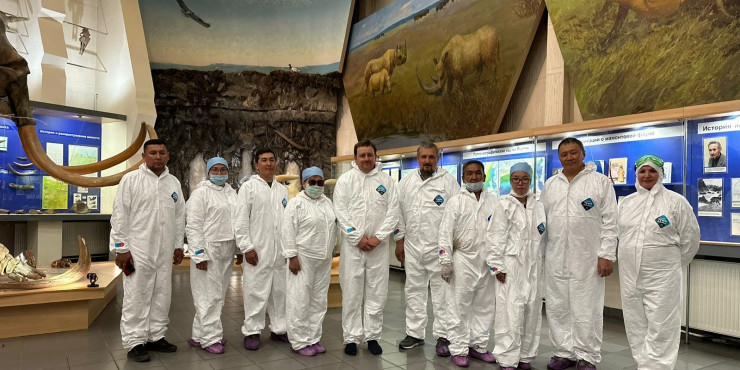
Researchers from the European University at St. Petersburg, the Institute of the History of Material Culture of the Russian Academy of Sciences and the State Hermitage Museum conducted the first series of experiments on DNA isolation from historical samples in the clean rooms of the paleogenomics laboratory located at the Solopharm pharmaceutical plant.

Genomes of Koban culture bearers shed light on the ethnogenesis of the modern population of the Caucasus

10.01.2024
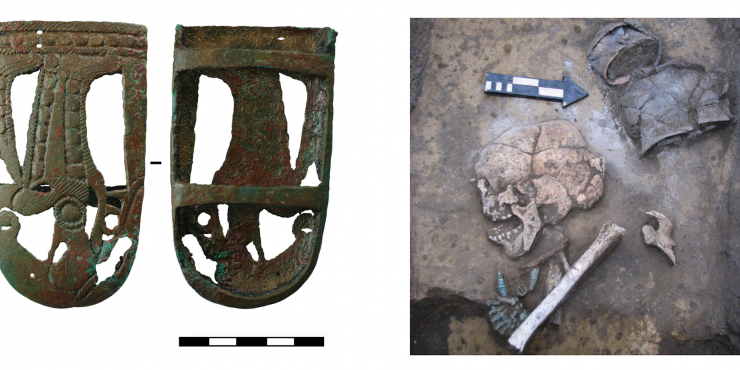
European University researchers Artem Nedoluzhko and Fyodor Sharko as lead authors have published an article in the prestigious international journal European Journal of Human Genetics (Q1, impact factor: 5.2). Together with Russian colleagues, they analyzed nuclear DNA from the remains of five representatives of the Koban archaeological culture.

Employees of the Hermitage and staff from the European University at St. Petersburg discuss the discoveries of the past season

29.11.2023
Svetlana Pankova, a researcher at the Laboratory of Paleogenomics of the European University and curator of the Department of Archaeology of Eastern Europe and Siberia of the State Hermitage Museum, spoke at the international scientific conference "Singing Arrows of Maodun": Hunnu from obscurity to empire", dedicated to the 75th anniversary of Sergey Minyaev’s birth (1948-2020).

European University scientists assess the role of hybridization in evolution

22.07.2022
Artem Nedoluzhko, Director for Development of the Laboratory of Paleogenomics of the European University, and a group of researchers from Russian and Norwegian scientific institutions have published an article in the international journal Frontiers in Genetics (Q2, impact factor: 4.772). The work is devoted to the study of the role of intergeneric hybridization and its adaptive potential for evolution.